The Quality Gap: Why Parents Are Choosing Private Early Childhood Education
A parent in Hanoi opens her laptop after bedtime. Her daughter turns three in the spring, and the search for the right early education program has been running for weeks. The options aren’t hard to find. There are plenty of them. What’s hard is knowing which ones actually deliver what they promise.
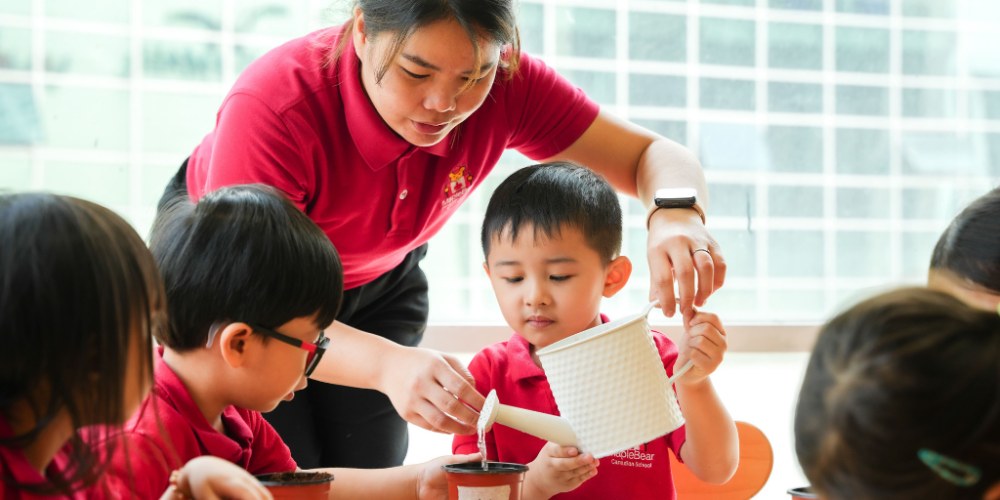
She’s not alone. That same search is happening in Sibiu, Romania, Bangkok, Thailand and Arequipa, Peru. Of course, the details differ by market. However, the frustration is consistent.
The Early Education Gap Looks Different Depending on Where You Are
The phrase “quality gap” in early childhood education tends to conjure one image: underfunded public schools failing families who deserve better. Yet the reality across Maple Bear’s 35-plus-country network is more varied and, in some ways, more telling.
In many markets, the gap isn’t a failing system. It’s an absent one. In fact, structured, curriculum-led early childhood education for children under five or six simply doesn’t exist within the public sector. Families aren’t leaving anything behind — they’re making a choice in a space the state governments never entered.
In other markets, the private early education sector has expanded fast enough to create its own version of the problem. Romania, for example, has seen sustained growth in private school enrolment, driven directly by dissatisfaction with the national system. But as more providers enter the market, families face a different challenge: density without differentiation. The options multiply while the quality signals remain hard to read.
Meanwhile, in Thailand, the shift is subtler. Mid-market private schools are seeing growing interest not from expatriate families, but from local Thai families who are actively choosing international-style early education as a deliberate investment in their child’s future readiness.
What Families Are Actually Looking For in Early Education
Across all of these contexts, the families choosing private early childhood education tend to share a clear set of expectations:
- A structured, research-backed curriculum with defined learning outcomes
- Bilingual exposure, particularly in English, introduced early and naturally
- Educators trained in all aspects of child development and education
- A learning environment that nurtures social confidence, emotional resilience and global awareness from the start
For example, in Vietnam, price-sensitive families are increasingly moving away from premium-fee international schools toward bilingual programs that offer credible international pathways at more accessible tuition levels. The desire for quality hasn’t changed. What has changed is the expectation that comes with paying private school fees, and the willingness to walk away when a school doesn’t meet it.
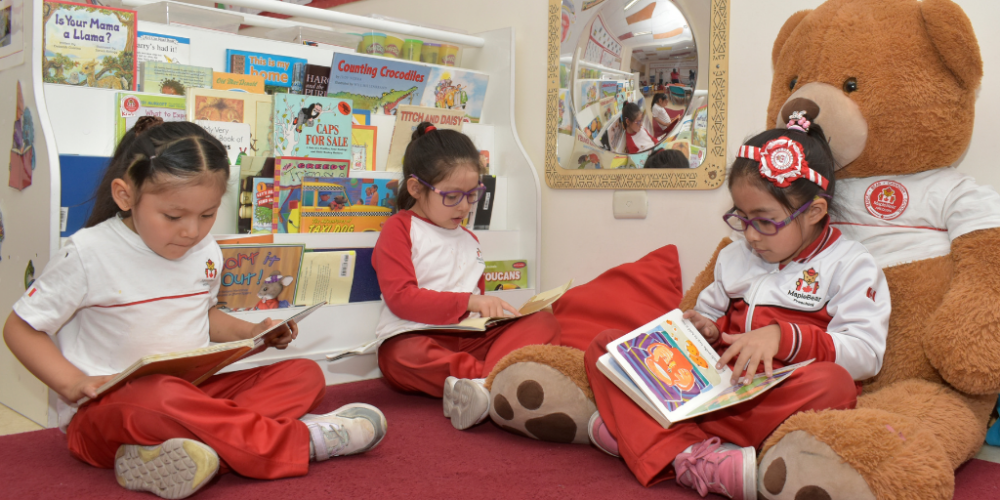
In Peru and across Latin America’s growing urban centres, a rising middle class is channelling that same aspiration into early education decisions, seeking programs that combine structure, bilingual development and a foundation that will carry their child forward. These are families who have done their research, know what they want, and commit when they find it.
What This Means for School Owners and Investors
Families choosing private early childhood education, especially in markets where it represents a meaningful financial commitment, are among the most motivated and loyal enrolments a school can attract. Word-of-mouth drives their decisions. In turn, trust drives their retention. A school that earns that trust in the early years doesn’t just fill one spot. It builds a pipeline.
For investors, the consistency of this pattern across markets is a signal worth paying attention to. Demand for structured, bilingual early childhood education is not softening. Parent expectations are rising faster than most markets are meeting them. And the early education segment, Maple Bear’s founding program and core strength, sits precisely at that intersection.
Maple Bear’s Early Years program, from Bear Care for infants and toddlers through to preschool, was built for exactly this moment.
Grounded in Canadian pedagogy, delivered through immersion-based bilingual instruction and play-based inquiry learning, it gives school owners a program families recognize, trust and return to.
Ultimately, whether a market is underserved or crowded with options, Maple Bear enters with something most providers can’t match: a two-decade track record across more than 35 countries, a proven Canadian methodology, and a program families already trust.