How Quality Assurance Drives Continuous Improvement in Maple Bear Schools
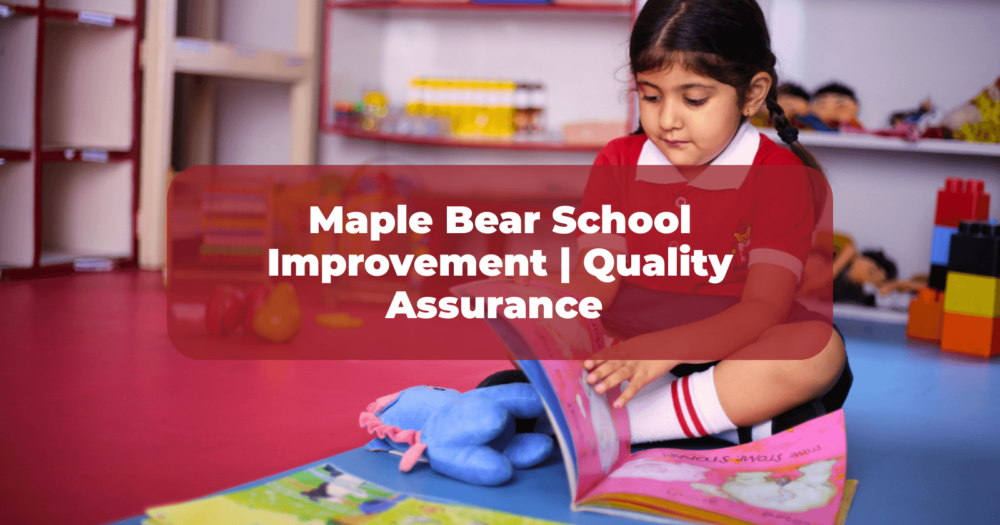
Maple Bear school improvement does not happen by chance. It is the result of a clear, structured process that runs across the entire network. That process is Quality Assurance.
Quality Assurance is not just a checklist. Instead, it is a collaborative approach to growth. It identifies what each school does well. It also pinpoints where each school can improve. As a result, every school in the network gets stronger each year.
This is how Maple Bear Global Schools maintains its standards across 500+ campuses and 37 countries.
How Maple Bear School Improvement Starts With Annual Reviews
Each year, every Maple Bear school goes through a formal Quality Assurance review. First, the school completes a self-assessment. Staff evaluate their own performance across four areas: program implementation, leadership oversight, instructional pedagogy, and assessment practices. This step encourages honest reflection before an external reviewer arrives.
Next, a trained reviewer visits the school for one to two days. During that time, they meet with teachers and administrators. They also observe classes directly. In addition, they check the school’s self-assessment against what they see in person.
Then, the reviewer sits down with the school team to share findings. Together, they identify any gaps and discuss solutions. This step is collaborative, not punitive. As EAQUALS notes, effective quality assurance focuses on ongoing improvement — not one-time inspections.
Finally, the school and reviewer set clear goals for the year ahead. A report captures the key findings. The following year, that same report guides the next review. As a result, Maple Bear school improvement stays connected from one year to the next.
Learn more about the Maple Bear Quality Assurance framework →
A Shared Ownership Approach to Growth
Quality Assurance works best when the whole school takes part. One case study from the Maple Bear network shows why.
A school had a challenge: improvement goals were set by leadership alone. However, teachers and staff were not involved. This created a disconnect between plans and practice on the ground.
The Quality Assurance review helped change that. First, the reviewer shared findings with all staff — not just administrators. Then, the whole team worked together to define new goals. As a result, the school moved from a top-down model to one built on shared ownership.
The impact was clear. Learning practices improved. Student codes of conduct were updated. Moreover, staff felt ownership of the process — which made the outcomes stick. Together, they showed that Maple Bear school improvement is strongest when everyone plays a role.
Actionable Goals Drive Real Change
One of the most important outcomes of each Quality Assurance review is goal-setting. Every school leaves the review with a clear, practical plan. That plan includes specific goals and actionable steps for the year ahead.
Furthermore, these goals reflect each school’s unique strengths and challenges. No two schools receive the same plan. Instead, each plan fits the school’s current stage of development and the needs of its students and teachers.
The OECD confirms that evidence-based evaluation is one of the most effective ways to sustain school improvement. Maple Bear applies this principle at scale — across 37 countries and hundreds of schools worldwide.
See why Maple Bear schools stand out globally →
Explore the research on bilingual education →
The Future of Quality Assurance at Maple Bear
The Maple Bear Quality Assurance framework continues to evolve. The goal is to build a more consistent and connected evaluation system each year.
This means deeper integration between teacher performance appraisals, digital learning tools, and improvement planning. It also means using data from across the network to spot trends and respond to them faster.
In short, Maple Bear school improvement is not a destination. It is an ongoing commitment — to every student, every teacher, and every school in the global network.